Editing-First Budget Strategy for Your New Orleans Wedding Highlight Video
Planning a New Orleans wedding on a real-world $20K, $30K budget means making choices. One of the biggest is video coverage. Many couples think they need 10 or 12 hours of cameras rolling to get a great highlight film. In reality, what matters most is not how long the cameras are on, but how strong the story is in the edit.
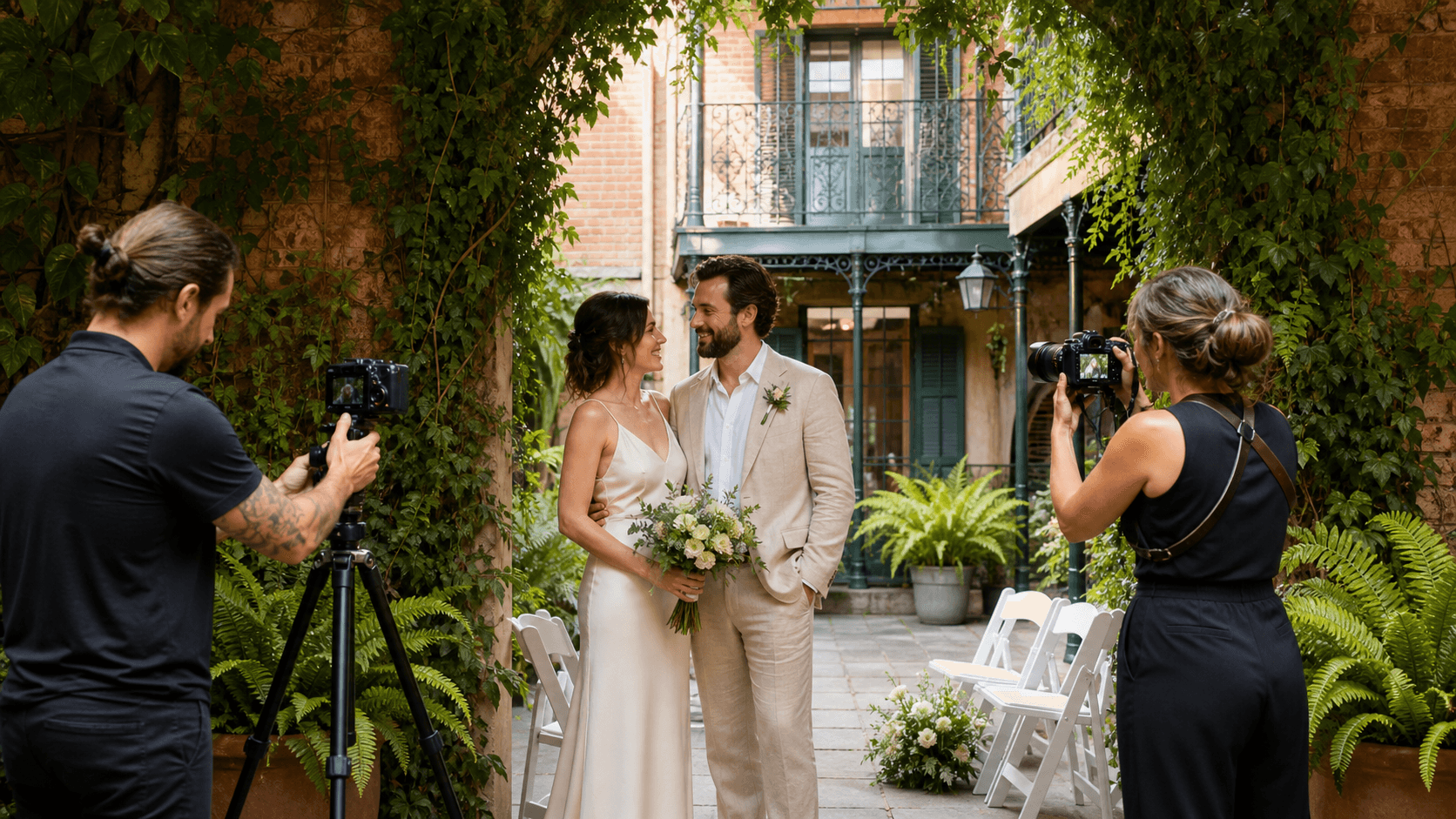
When you plan around editing first, you can book fewer hours, keep the day calmer, and still end up with a rich, emotional New Orleans wedding highlight video package. This is especially helpful in a city with heat, humidity, surprise showers, second lines, and traffic around the French Quarter. The day might feel a little wild, but the film can feel clear and intentional when pre-production is done right.
Quick Takeaways for Busy Couples
If you are skimming while juggling guest lists and vendor emails, here are the big ideas:
- You do not always need 10 to 12 hours of coverage. With a smart timeline, a 6 to 8 hour New Orleans wedding highlight video package can still feel full and cinematic.
- Pre-planning must-have moments, audio priorities, and music vibe gives your videographer a clear target and keeps your budget focused on what the edit actually needs.
- Build in buffers for heat, rain, travel, and parking so the crew spends time shooting, not hunting for a spot near the Quarter.
- Limit revisions by talking early about tone, pacing, and what matters most to you, like vows, toasts, wild party energy, or quiet moments together.
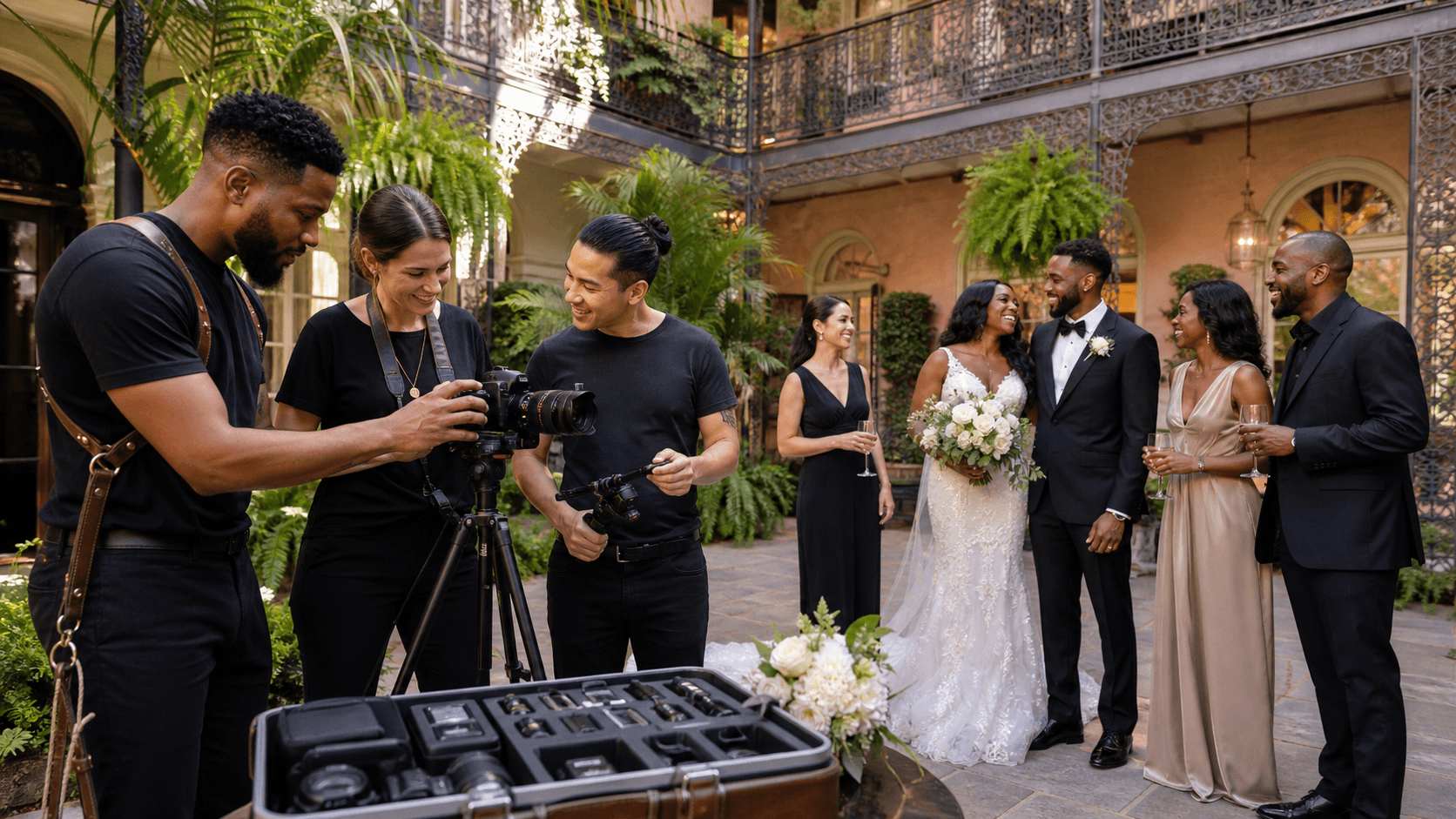
- A small, reliable team with a simple process, backup shooter options, and fast delivery keeps the stress low so you can enjoy your day.
- Editing-first thinking is especially helpful for low-key Louisiana and Houston weddings where you want gorgeous memories without blowing the budget.
The rest of this guide breaks down how to plan your story first, build a shot list, think about audio and music, and set smart revision limits before the cameras ever turn on.
Curious what an editing-first package could look like for your date and venue? Reach out with your rough timeline, and we can recommend realistic coverage hours that fit a $20K, $30K wedding budget.
Start with Story, Then Set Your Coverage Hours
Before you talk about how many hours you want, it helps to answer one question: What do you want your film to feel like?
Some couples want a slow, intimate video that leans into vows and family. Others want a hype, dance-heavy edit that feels like a party from start to finish. Some want a mix. Once you know the feeling, you can work backward to what must be filmed to create that story.
For example, if you want:
- Intimate and quiet: you will want time for letters, private vows, and a calm couple session.
- Family-focused: you will want hugs, reactions, and speeches from key people.
- Party-focused: you will want a solid chunk of dance floor coverage, band shots, and maybe a second line.
This approach lets you trim hours where not much is happening, like long gaps between ceremony and reception. Instead of paying for cameras to sit in a hotel lobby, you can focus on the parts that actually show up in the highlight.
New Orleans adds a few special factors. Travel from an Uptown hotel to a French Quarter church, then out to a Metairie reception, can eat a lot of time. Summer heat and afternoon storms are common, especially around July. It helps to:
- Keep getting-ready spots close to your ceremony when possible.
- Plan first looks or portraits in shaded courtyards or by the river at softer light times.
- Build at least 15 to 20 minutes of travel buffer when crossing busy areas.
- Add a few extra minutes for valet lines or street parking if you are near the Quarter on a busy night.
A clean, bundled photo and video package with clear base hours and simple add-ons keeps this from getting out of hand. You can start with a realistic number of hours, then add a little if your timeline truly needs it, instead of locking into an oversized package before you even know your plan.
Build a Smart Shot List and Must-Have Moments
Editors do not need endless footage. They need what we call "editor fuel," the shots that open, carry, and close your story. That means:
- Strong openers and closers, like a quiet balcony moment early in the day and a second line or sparkler sendoff at the end.
- Dynamic in-between moments, like walking through the Quarter, dancing under cafe lights, umbrellas in light rain, or a cheering entrance into a courtyard.
For a New Orleans wedding, some classic must-haves are:
Pre-Ceremony
- Details and reactions in a historic hotel or Creole-style home
- Balcony or terrace views over the city or the river
- Street scenes like streetcars, beads, musicians, or architecture
Ceremony
- Vows with clean audio
- Ring exchange and first kiss
- Guest reactions, both laughs and tears
Reception
- First dance and key parent dances
- Toasts that matter to you
- Cake cutting or whatever dessert twist you choose
- Second line entrance or sendoff if you are having one
- At least 10 to 15 minutes of packed dance floor energy
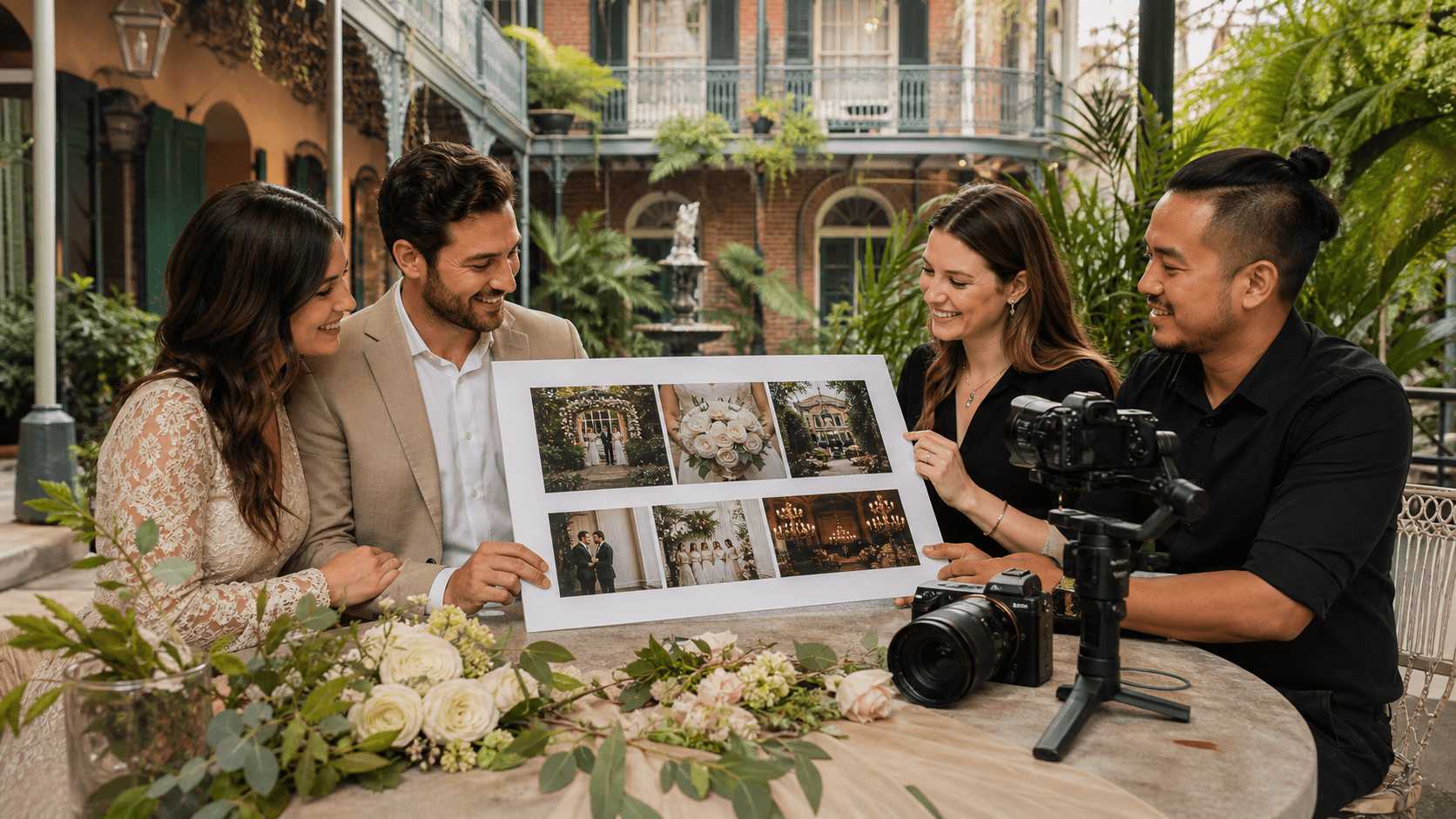
To avoid overwhelm, it helps to choose 5 to 10 non-negotiable shots, then let everything else be "nice to have." That way you do not feel like you have to direct the day. A simple pre-wedding questionnaire can lock in these priorities and keep everyone on the same page.
Pro Tips Box: Must-Have Shot Checklist
- One strong establishing shot of your venue exterior
- One quiet couple moment away from the crowd
- One clean, close audio moment like vows or a favorite toast
- At least three angles of your ceremony if you add a second shooter
- One sequence walking through New Orleans streets, a courtyard, or along the river
- 10 or more seconds of wild dance floor energy or second line
- A quick indoor backup spot for portraits in case of rain or extreme heat
Music, Audio, Pacing, and Revisions That Protect Your Budget
Music is a big part of your highlight video, but most popular songs are not legal to use in a film that will be shared online. Licensed music is the safe option. That does not mean your song has to sound generic.
A helpful approach is to send your videographer:
- 3 to 5 favorite artists or bands
- A playlist that feels like "you"
- A note on the mood you like, such as soulful R&B energy, acoustic folk, upbeat pop, or brass-inspired
We can then match the energy and feel, even if we cannot use the exact track.
Audio is another key piece, especially in a noisy city. Courtyards, churches, and hotel ballrooms can echo. The French Quarter can add street noise at any time. Good teams plan for that with small lav mics, discreet recorders, and backup options if the wind picks up or a nearby bar gets loud. For hot, storm-prone summer days, it helps to schedule private vows or letters in shaded or indoor spots so sound stays clean.
Lighting also matters. New Orleans venues range from moody jazz bars to bright courtyards:
- Aim for outdoor portraits in softer light (early morning or an hour before sunset).
- Ask your team how they handle darker reception spaces so your party footage still looks clear and vibrant.
- If you are planning candles or string lights, let video know so they can balance their lighting with the ambiance you want.
Pacing is where your preferences really shape the edit. Some couples want a slow build that starts quiet and ends on the dance floor. Others want high energy right away. During pre-production, share if you enjoy:
- Slow-build pacing that starts tender and grows
- Steady pacing that stays calm but upbeat
- "Party from second one" pacing with quick cuts and big moments
Setting that tone early keeps revision rounds short.
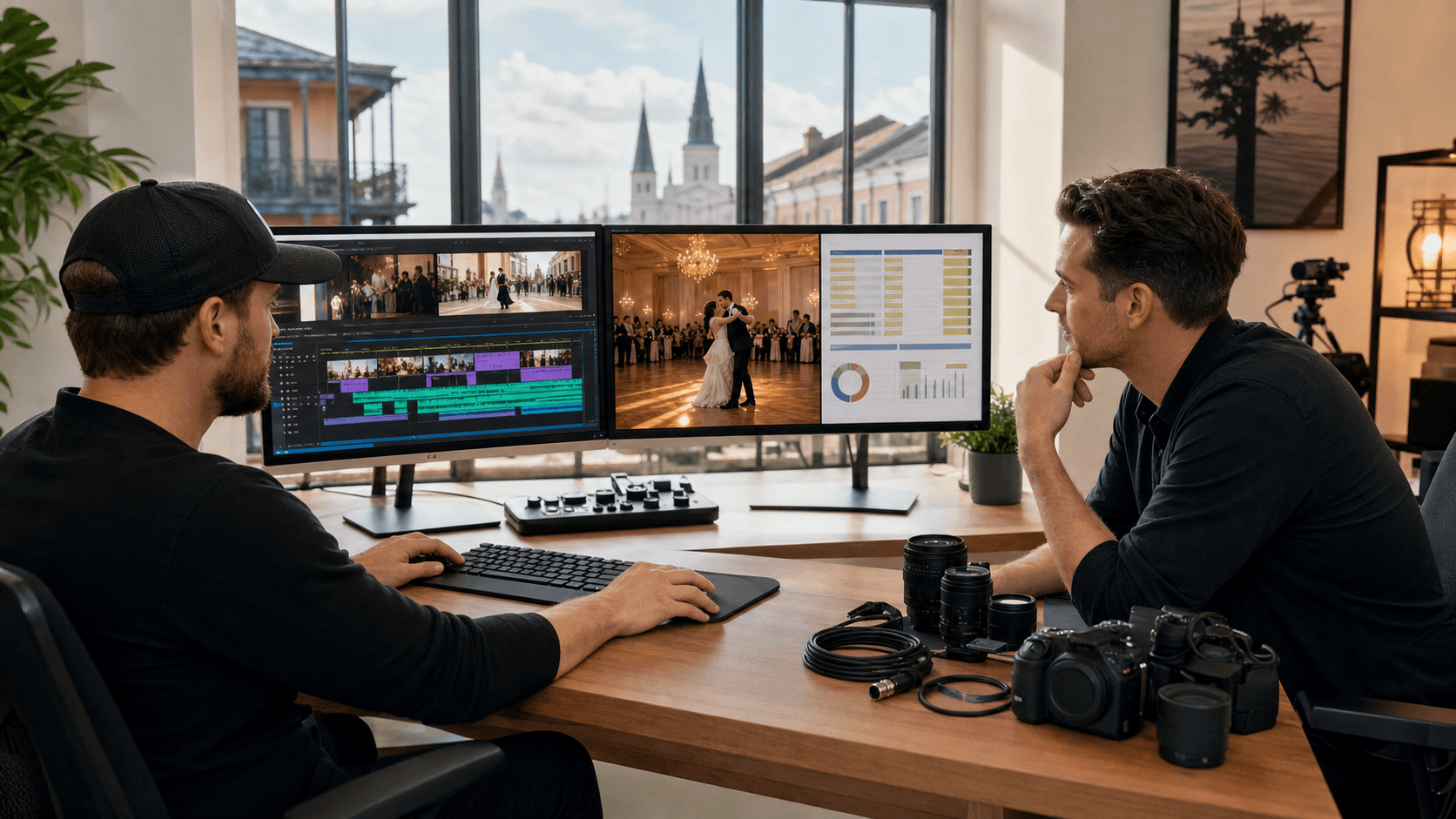
On revisions, boundaries actually protect your film and budget. Unlimited tweaks can turn into over-editing, which slows down delivery and can water down the story. A focused approach works better:
- Watch your first draft once just to feel it.
- Watch again to note details.
- List 5 to 10 clear changes, like "more grandparents, less decor," or "shorter intro, longer dance section."
- Combine feedback as a couple so your editor gets one clear list.
A simple, clear delivery timeline with a teaser first and the full highlight a bit later lets you know exactly when to expect each step. A small, professional team can usually turn around a teaser within a few weeks and the full highlight shortly after, so you are not waiting months. Reliable storage and backups mean you are not worrying about files disappearing.
Simple Planning, Strong Story
Editing-first planning is about starting with feeling, not hours. When you define how you want your New Orleans wedding highlight video package to feel, then pick coverage hours, must-have shots, music vibe, and pacing around that, you get more story without needing endless cameras or time.
For couples planning low-key Louisiana or Houston weddings on real-world budgets, this mindset keeps the focus on what you will actually watch again and again: your promises, your people, your city, and the way the day really felt.
If you would like help shaping an editing-first timeline for your venue and date, send over your rough schedule and guest count. We will walk you through coverage options, backup shooter possibilities, and delivery timelines so you can book video with confidence and keep your wedding budget in a comfortable place.
Capture Your New Orleans Wedding In A Stunning Highlight Film
If you are ready to relive your day in a way that feels authentic and effortless, we would love to create a film that reflects your story. Explore our New Orleans wedding highlight video package to see how we pair cinematic visuals with true-to-life moments. At WeddingLens, we collaborate closely with you on timeline, style, and priorities so every important detail is covered. Reach out to us to start planning a wedding film you will be proud to watch and share for years.