Plan Coverage That Fits Your New Orleans Venue
Choosing an affordable wedding package in New Orleans is a lot easier when you plan around your actual venue instead of a cookie-cutter timeline. French Quarter courtyards, shotgun homes, and small restaurants all feel very different, and that changes how many hours of coverage you really need, how your photo and video team moves, and what you can expect from your final gallery and films.
We work with a lot of relaxed, low-key weddings in the 20, 30k range, and we see the same patterns again and again. With smart coverage blocks, realistic travel buffers, and a little planning for sound, you can keep your package affordable and still have everything feel polished and professional.
Quick Takeaways for Planning Your Coverage:
- This guide is for couples planning laid-back weddings that still care a lot about thoughtful photos and video
- Venue type matters because it shapes movement, sound, and how many hours actually make sense
- A smaller, affordable package can still feel high-end with smart timing and clear priorities
- Big New Orleans factors: heat and humidity, surprise rain, and constant street noise
- Add a second shooter when you truly need split coverage or more angles in tight spaces
- Fast delivery is realistic if your coverage is focused and your timeline is clear
- A small, reliable team with backup shooters and simple planning tools keeps things low-stress
Many New Orleans weddings lean intimate and character-filled rather than ballroom big, so a standard 10- to 12-hour package can feel like overkill. Our own approach at WeddingLens is to keep the team small and reliable, keep the planning process simple, and build bundle pricing around what you will actually use, with quick turnaround baked in.
If you want a starting point while you read, you can peek at packages and sample galleries to see how different coverage blocks look in real New Orleans spaces.
Right-Sized Coverage for French Quarter Courtyards
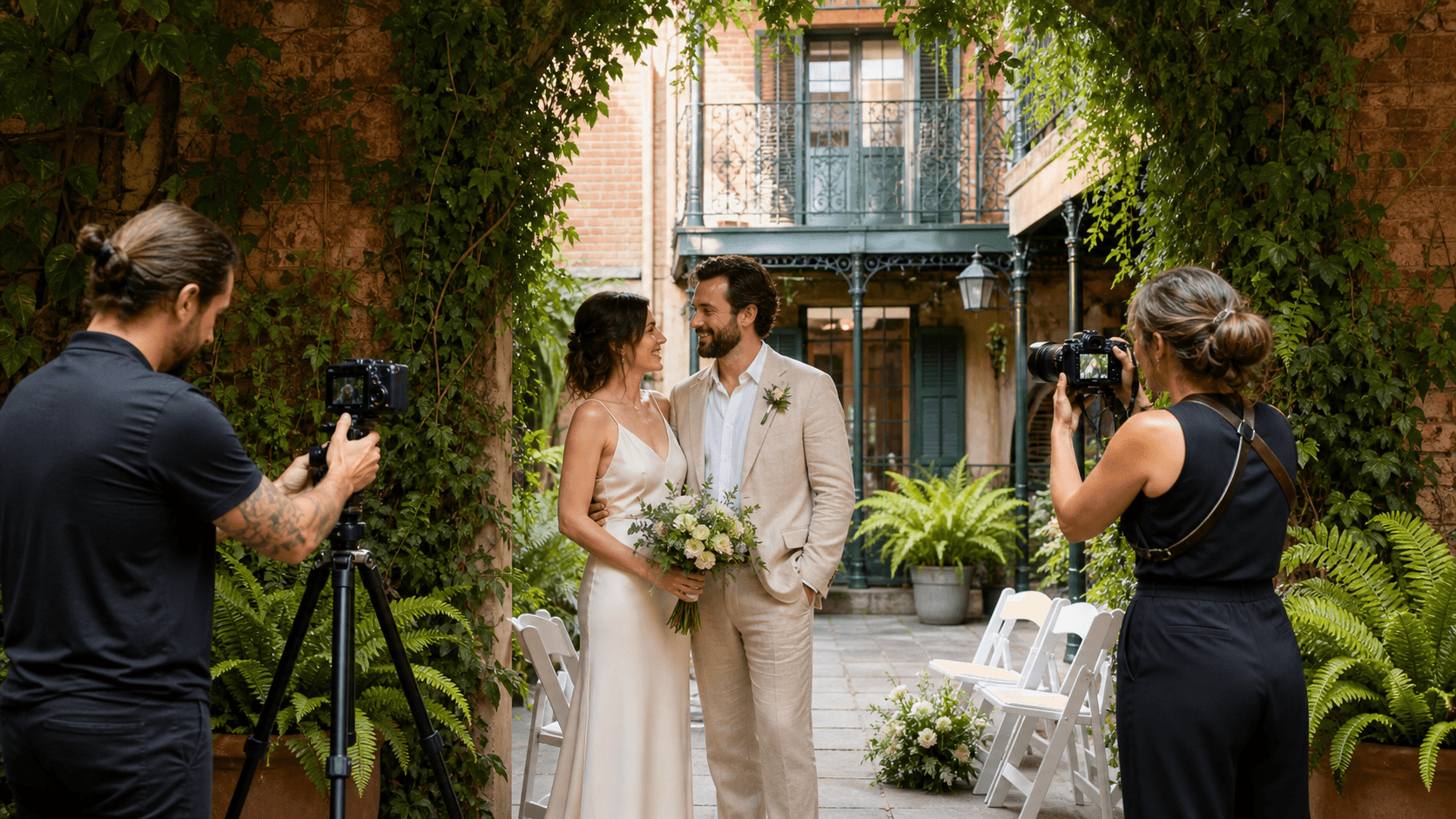
French Quarter courtyards are compact and charming. Often, everything from first look to last dance happens within a block or two. That is great for your feet, but it also means your timeline can be tighter and more intentional. It also means small delays can have an outsized impact, so it helps to plan with the area's quirks in mind, like street activity, load-in constraints, and earlier fall sunsets.
A few things to keep in mind:
- Second lines and street traffic can slow arrival and breakdowns
- Side streets can be jammed right when you need to move gear
- October often brings softer light and earlier sunsets, plus lingering humidity
- Guests may need extra time to find parking in the Quarter, especially on event weekends
For many courtyard weddings, a 6- to 8-hour block is more than enough. A common pattern is to arrive halfway through getting ready or simply meet you at the courtyard for details and a first look, then stay for the ceremony, cocktail hour, and portraits in the same space. From there, coverage typically runs through toasts, first dance, and a bit of open dance floor so you get the emotional peaks without paying for hours that feel repetitive.
Places you can trim to stay affordable include skipping early morning prep, especially if it is in a hotel far from the venue, and starting coverage once you are dressed and almost ready for first look. You can also keep family formals in one spot to avoid extra moving and setup time.
A second shooter is most helpful when you have:
- Two separate prep locations you want covered at the same time
- A very tight courtyard where the main shooter has limited movement and angles
- A strong focus on guest reactions during vows and toasts
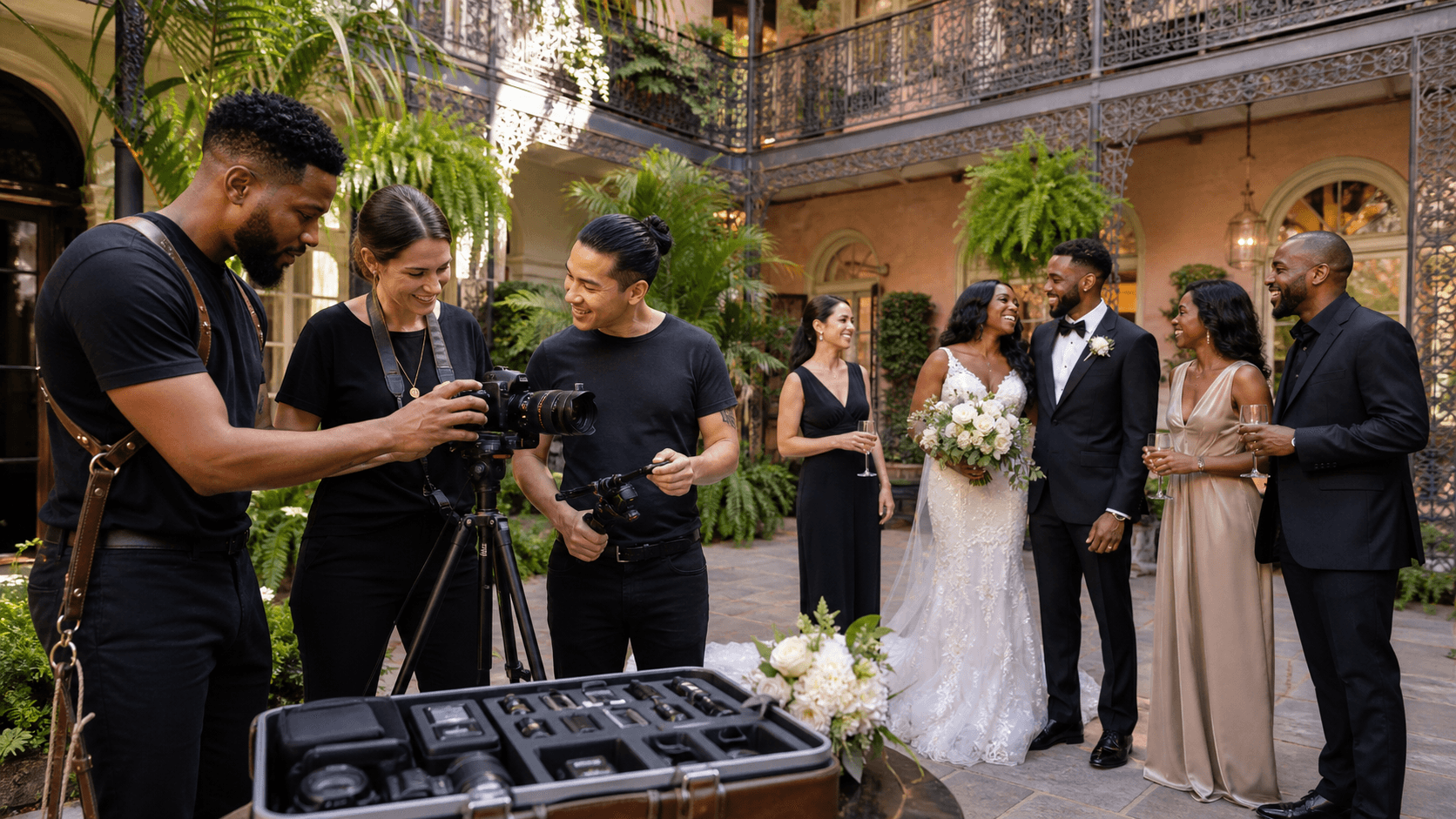
For video and audio, the Quarter is beautiful and loud. You may have live jazz drifting in, people on balconies, carriage traffic, and bar crowds on nearby streets. A professional team will use lav mics and backup recorders on the officiant and couple, plus a direct feed from any venue sound system when possible.
Simple ways to get cleaner audio:
- Ask your planner or venue not to point big speakers directly at hard walls
- Plan 5 to 10 quiet minutes for private vows or reading letters away from crowds
- Let your media team know where toasts will happen so they can place recorders thoughtfully
Shotgun Homes and Backyard Celebrations That Flow
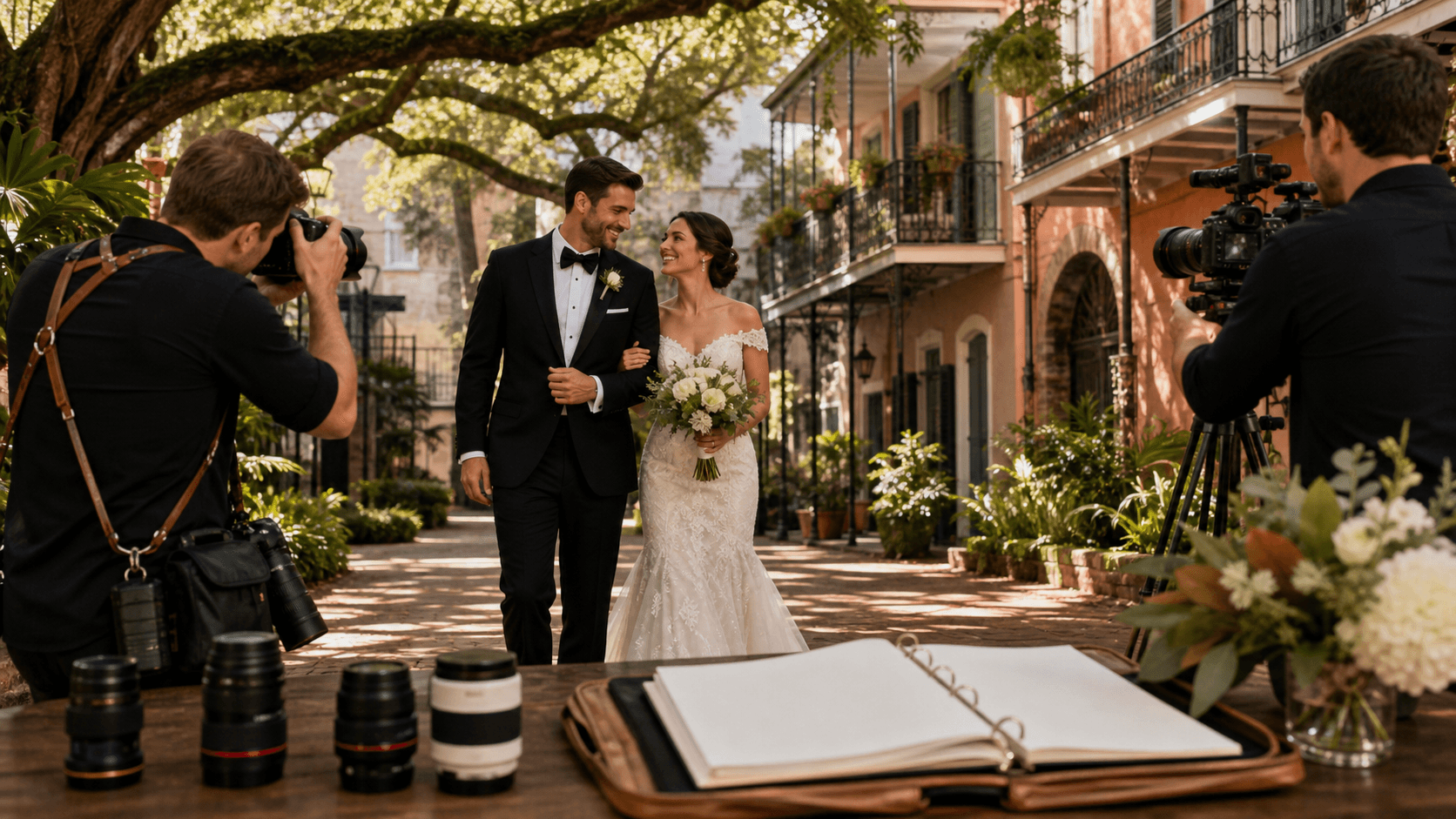
Shotgun homes and backyard weddings feel very New Orleans, and they change how we work. Long, narrow rooms and tight hallways limit how many people can be in one spot, and how your media team can move without being in every frame. These spaces can be incredibly warm and personal on camera, but they reward a plan that respects the layout, noise, and weather.
Common layout points:
- Prep in the front room, ceremony outside, reception in the back or side yard
- Uneven ground, string lights, and fence lines that create natural boundaries
- Neighbors, dogs, and music from nearby houses that show up in your audio
Weather here can swing in one day: hot and sticky in the afternoon, cooler and breezy later. Planning for comfort and flexibility helps, especially when the ceremony and portraits are outdoors and guests are moving between indoor and outdoor zones.
It helps to think about:
- Shade for your ceremony area
- Bug spray, fans, and a rain-backup corner under a porch or tent
- Simple, covered spots for portraits if a shower pops up
Lighting and comfort details make a big difference in home spaces:
- Test your string lights after dark so you know how bright they really are
- Add a small lamp or two where toasts will happen so faces are not in deep shadow
- Keep a few towels and blotting papers handy for sweat on hot nights
A 5- to 7-hour block often fits home-based weddings well. Typically, coverage starts close to ceremony time with a bit of final prep, then continues through the ceremony, family photos, and couple portraits nearby. From there, it usually carries through dinner, toasts, first dance, and a short dance set so the story feels complete without stretching late into the night.
To keep things affordable, you can use one flexible shooter and only add a second shooter for key segments like ceremony and portraits. That gives you extra angles when they matter most without doubling coverage for the whole day.
If your shotgun home, church, and reception are in different neighborhoods, build in travel buffers between each stop. New Orleans traffic and parking can quietly eat 15 to 30 minutes if you do not plan for it, especially on Saints game days or during festival weekends.
For video, good audio and lighting take a little thought. Choosing a ceremony spot with some shade, limited street noise, and clear edges for cameras can make everything smoother, and simple lighting can make interiors feel polished without turning the space into a production.
Key considerations:
- Pick ceremony spots with some shade, limited street noise, and clear edges for cameras
- Use simple continuous lights to boost dark interiors instead of harsh flashes in guests' faces
- Turn off loud window units or fans just for vows or speeches when possible
- Give your media team access to any portable speaker or mic so they can grab a clean feed
Small Restaurants and Bars Without the Stress
Restaurant and bar weddings feel cozy and social, but they come with their own quirks. Tight seating and fixed layouts limit where stands or tripods can go, so your team often has to tuck into corners and shoot around guests instead of moving freely. These spaces can still photograph and film beautifully when you plan around the room's constraints and focus on the moments that matter most.
Things that shape your coverage:
- Shared walls with other businesses and kitchen noise behind swinging doors
- Bar crowd sounds if the space is partly open to the public before or after your event
- Extra tourist traffic and parking challenges in areas like the French Quarter or Frenchmen Street
A 4- to 6-hour affordable wedding package in New Orleans restaurant spaces can work really well, especially if your ceremony is elsewhere. In that case, it is often most efficient to start coverage at cocktail hour and stay through the key reception beats: room details and guest arrivals, entrances, toasts, first dance, cake cutting, and 30 to 45 minutes of open dancing.
If you are doing ceremony and reception in the same restaurant, you can keep it efficient by designing the day around a shorter ceremony in one corner or patio and focused coverage of vows, toasts, first dance, and key moments. That approach usually puts less emphasis on hours of late-night dancing and more on connection and story.
Deciding between a single shooter and a second:
- One shooter can be enough in a simple, square room with clear sight lines
- A second shooter helps in L-shaped spaces where one person cannot see every angle
For audio, restaurant weddings are all about tradeoffs. You want the atmosphere of music, clinking glasses, and laughter, but you also want to hear your vows and speeches clearly. Lav mics on the couple and anyone giving toasts, plus a discreet recorder on the house sound, can make a big difference.
Practical sound tips:
- Ask the venue to lower background music during vows and speeches
- Keep all speeches in one spot with decent light so both photo and video look consistent
- Avoid standing speakers directly under HVAC vents that will roar in the background
Travel Buffers, Weather, Backup Plans, and Pro Tips
New Orleans city logistics matter more than most people expect. The French Quarter and Marigny have narrow streets, and events at the Superdome, parades, and second lines can slow any drive. Parking is often in paid lots or tight side streets, and load-in with gear takes time.
A professional studio will quietly build travel and load-in time into your coverage so you do not lose actual shooting minutes. That helps keep a smaller package feeling full instead of rushed, while still staying in an affordable range.
Weather and light planning are especially important in months with earlier sunsets. A few helpful habits:
- Set ceremony time with your photo-and-video team so you protect portrait light
- Plan one simple covered backup spot for portraits in courtyards and backyards
- Have ice water and blotting tissues nearby, and schedule short shade breaks
- Give guests a heads-up about potential heat and suggest hand fans or lighter dress codes
A small, reliable team should have backup shooter options and gear plans if someone gets sick or a camera fails. Using a shared questionnaire and one timeline meeting for both photo and video keeps everyone on the same page, which also supports faster delivery of sneak peeks, highlight films, and full galleries.
Pro Tips Checklist to Make the Most of Your Package:
- Decide your must-have moments (vows, speeches, first dance) before you pick hours
- Group formal portraits into one time block and one location when possible
- Add a second shooter only where angles or tight layouts really need it
- Lock ceremony time around light and likely noise, not just guest convenience
- Share floor plans and rain plans early so your team can pre-plan angles and audio
- Give your media team one point person to wrangle family and keep things moving
- Build 10- to 15-minute buffers before and after travel between neighborhoods
Build the Right Package for Your New Orleans Day
The best affordable wedding package in New Orleans is always built around your real venue, not a generic template. For French Quarter courtyards, that means paying attention to audio planning, realistic travel buffers, and compact coverage blocks. For shotgun homes, it is about flexible hours, weather backups, and clever lighting. For small restaurants, it is honest planning around movement, sound, and the few key moments that matter most.
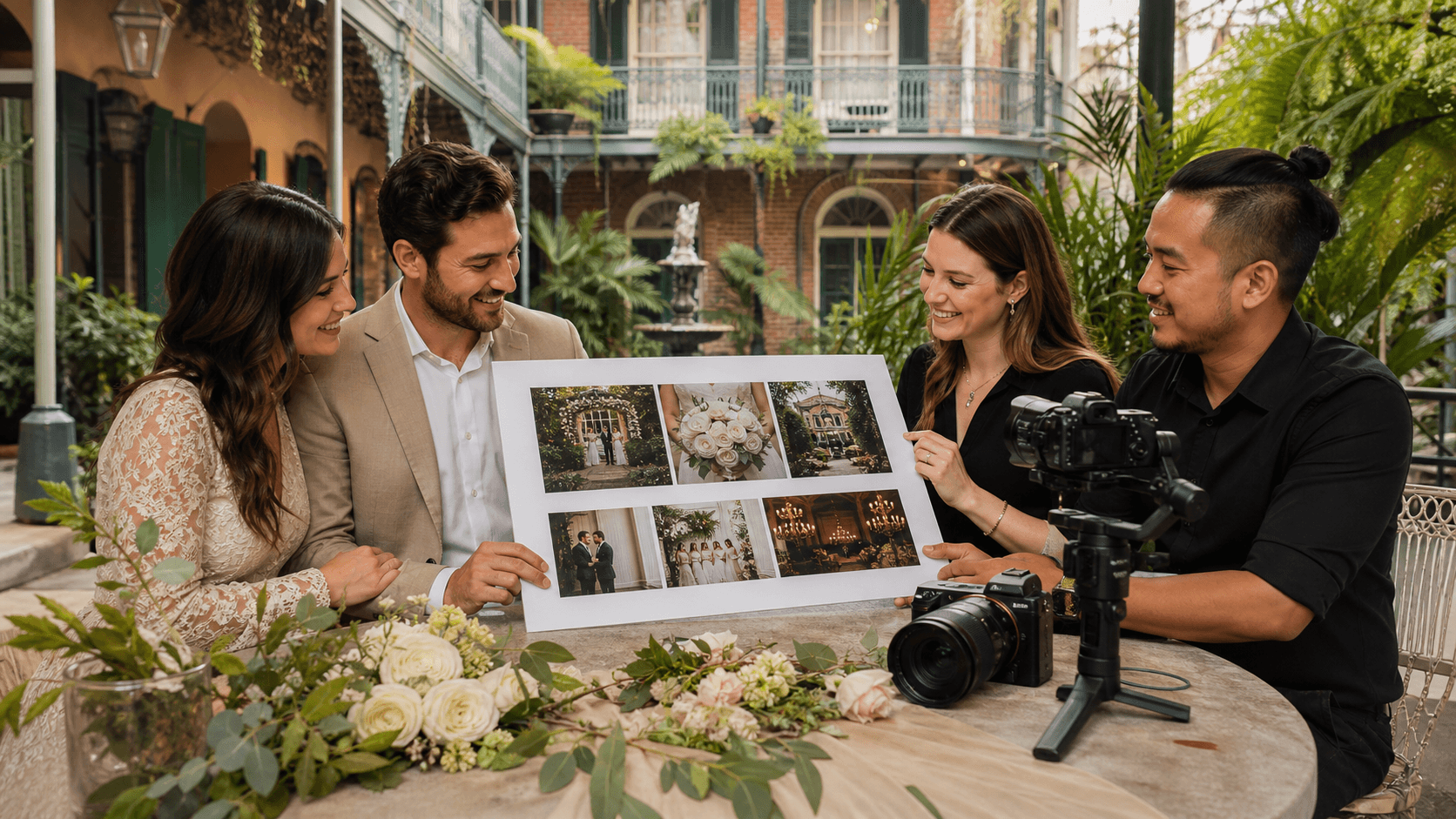
Start with your venue type, guest count, and what you still want to see and hear clearly five or ten years from now. Draft a simple timeline on paper, layer in travel time and coverage blocks, and be open about your budget so your team can suggest where to scale up or down without losing what is important.
If you would like help matching coverage to your specific New Orleans venue, you can check availability and compare packages for your date.
A thoughtful package will fit your venue, your pace, and the way you actually want your New Orleans wedding day to feel. If you are not sure how many hours you need or whether to add a second shooter, reach out and we will walk through the options with you so you can feel confident in your plan.
Secure Stunning Wedding Memories Without Breaking Your Budget
If you are ready to lock in beautiful photo and video coverage for your big day, our team at WeddingLens is here to help. Explore our Affordable wedding package in New Orleans to see how we can capture your celebration with quality and care. We will walk you through the options, answer your questions, and tailor coverage to fit your timeline and budget. Reach out today so we can reserve your date and start planning the visuals you have been imagining.