Plan A New Orleans Photo + Video Package That Fits You
Planning a small New Orleans wedding and wondering how much photo and video you actually need? Maybe you're getting married at the courthouse, in a French Quarter courtyard, in an Airbnb, or at a favorite restaurant, and you know you do not want a full 10-, 12-hour production with cameras in your face all day.
The big worry is common: if you only book a few hours, will it still feel complete? Yes, it can. When you set clear priorities, build a simple timeline, and pick the right mix of photos and video, a low‑key day can still feel fully covered and very "you," even with a total wedding budget in the $20K, $30K range.
We work with a lot of couples planning micro‑weddings and elopements around the city, so we see what actually works. In this guide, we'll walk through minimum hours that make sense, must‑have moments, New Orleans‑specific planning around heat and rain, and how to choose deliverables that feel satisfying, not skimpy.
Quick Takeaways
- Most intimate New Orleans wedding photo and video packages land in the 3- to 6-hour range.
- Your coverage should be built around three main priorities: ceremony vs. getting ready, portraits, and time with guests.
- Local details like heat, surprise rain, second lines, and travel time can easily add or remove an hour.
- For video, clear audio of vows and toasts matters more than fancy extras.
- A small, experienced (and affordable) team with a clear process, backup plans, and realistic delivery timelines keeps the day relaxed and on schedule.
Deciding How Many Hours You Actually Need
For micro‑weddings, "a full day" does not always make sense. You're not wrangling 200 guests or managing a big ballroom timeline, but New Orleans logistics and weather still affect how much coverage you need.
Here are common hourly ranges that work for intimate celebrations:
- 3 to 4 Hours for simple elopements or city hall plus quick portraits.
- 4 to 5 Hours for small courtyard or restaurant weddings with a short reception.
- 5 to 6 Hours if you want some getting ready, a first look, ceremony, portraits, and a bit of toasts or dances.
Some realistic New Orleans setups:
- City Hall + French Quarter + Dinner
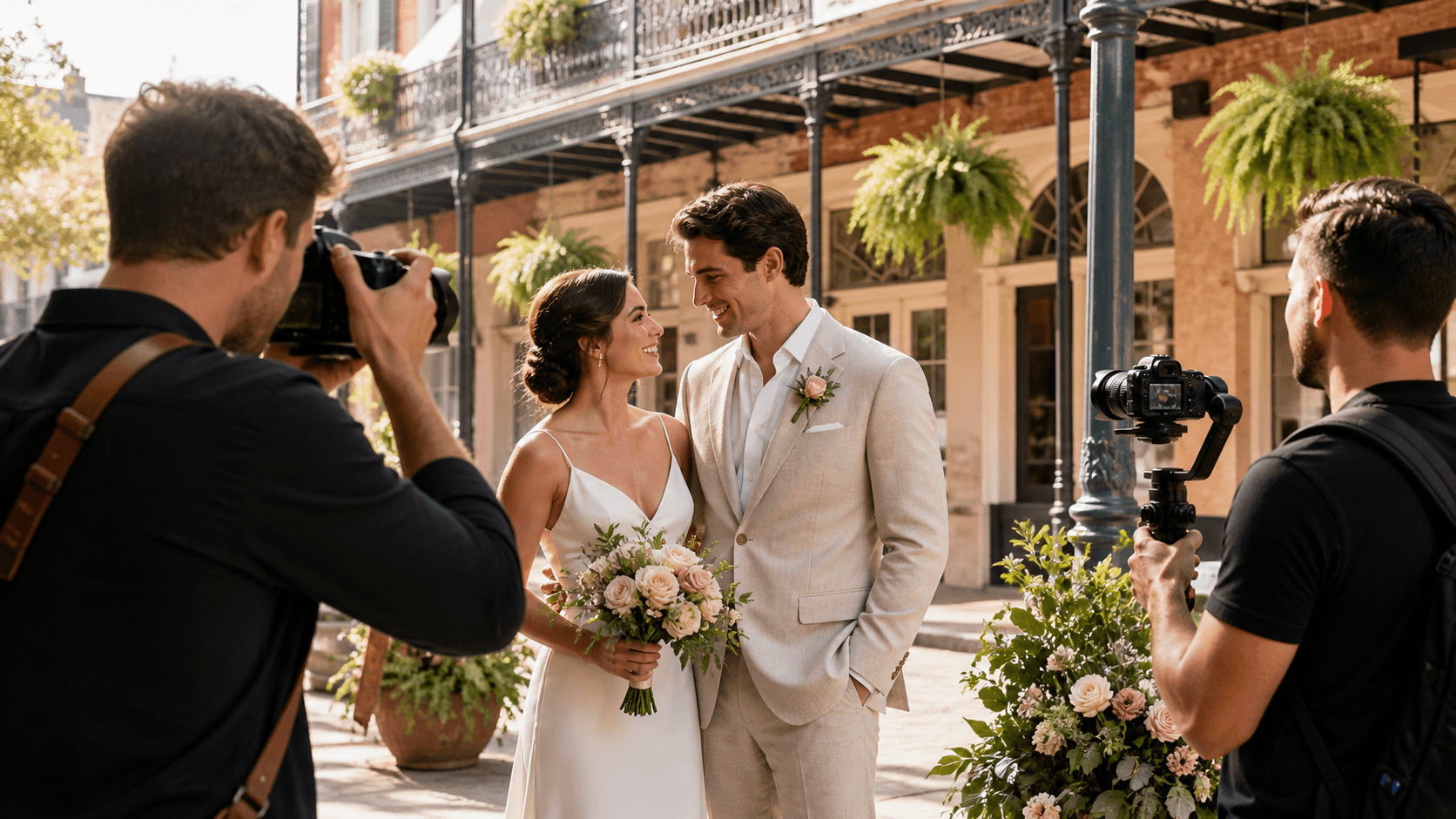
City Hall ceremony, a walk to the French Quarter for portraits, then dinner at a nearby restaurant: 3 to 4 hours usually covers arrival, ceremony, portraits, and a little time at dinner. Add at least 20 to 30 minutes of buffer for parking and traffic, especially near the streetcar lines and around popular spots like Canal Street or Royal Street.
- Garden District Backyard + Short Second Line
Garden District backyard ceremony with a champagne toast, a short second line around the block, then dinner at a nearby restaurant: plan on 4 to 5 hours. Outdoor setups work best with a small buffer, about 15 to 20 minutes, for passing showers, handing out umbrellas, or moving under cover.
If your date is in August, timing is extra important. The heat and humidity are rough in the middle of the day, so it often works better to:
- Move the ceremony later, closer to early evening.
- Plan portraits during golden hour or just after sunset.
- Add a bit of time for guests walking slowly in the heat or ducking back into AC.
A simple way to choose your hours: list your non‑negotiables first, like vows, portraits, first dance, or cake cutting. Then sketch a rough timeline and see if it fits into 4, 5, or 6 hours of continuous coverage.
Want help eyeballing how many hours you actually need for your New Orleans plan? Check our sample packages and coverage guides to see what 3, 4, or 6 hours really looks like.
Checklist: Quick Coverage Planning for Low‑Key NOLA Weddings
Use this as a starting checklist when you're sketching your timeline:
- [ ] Ceremony start and end time
- [ ] Travel time between locations (City Hall → Quarter → restaurant, etc.)
- [ ] Portrait window (ideally near golden hour)
- [ ] Time for group photos with family/friends
- [ ] Buffer for heat, rain, or traffic (at least 15 to 30 minutes)
- [ ] When you'll do any toasts, first dance, or cake cutting
- [ ] How much getting-ready coverage (if any) actually matters to you
If the boxes you've checked fit within a 3- to 6-hour window, you're in a good range for a low‑key wedding.
Must‑Have Moments for a Low‑Key Celebration
You don't need everything, you just need the right things. For small weddings, smart priorities make a short package feel complete.
Most couples want these must‑haves covered:
- Ceremony with close‑ups of vows and rings.
- Just‑married Portraits, plus a handful of family and friend group photos.
- A bit of "In‑between" Coverage, like guests arriving, candids at cocktail hour, and details of the space.
If budget and time allow, these are nice‑to‑haves:
- Getting Ready Snippets, like final touches, dress or suit buttoning, or a letter exchange.
- A short First Look, which can help calm nerves and open up time for portraits while the light is softer.
- A First Dance, Parent Dances, or a Simple Group Toast once everyone is seated.
Some realistic setups we see often in New Orleans:
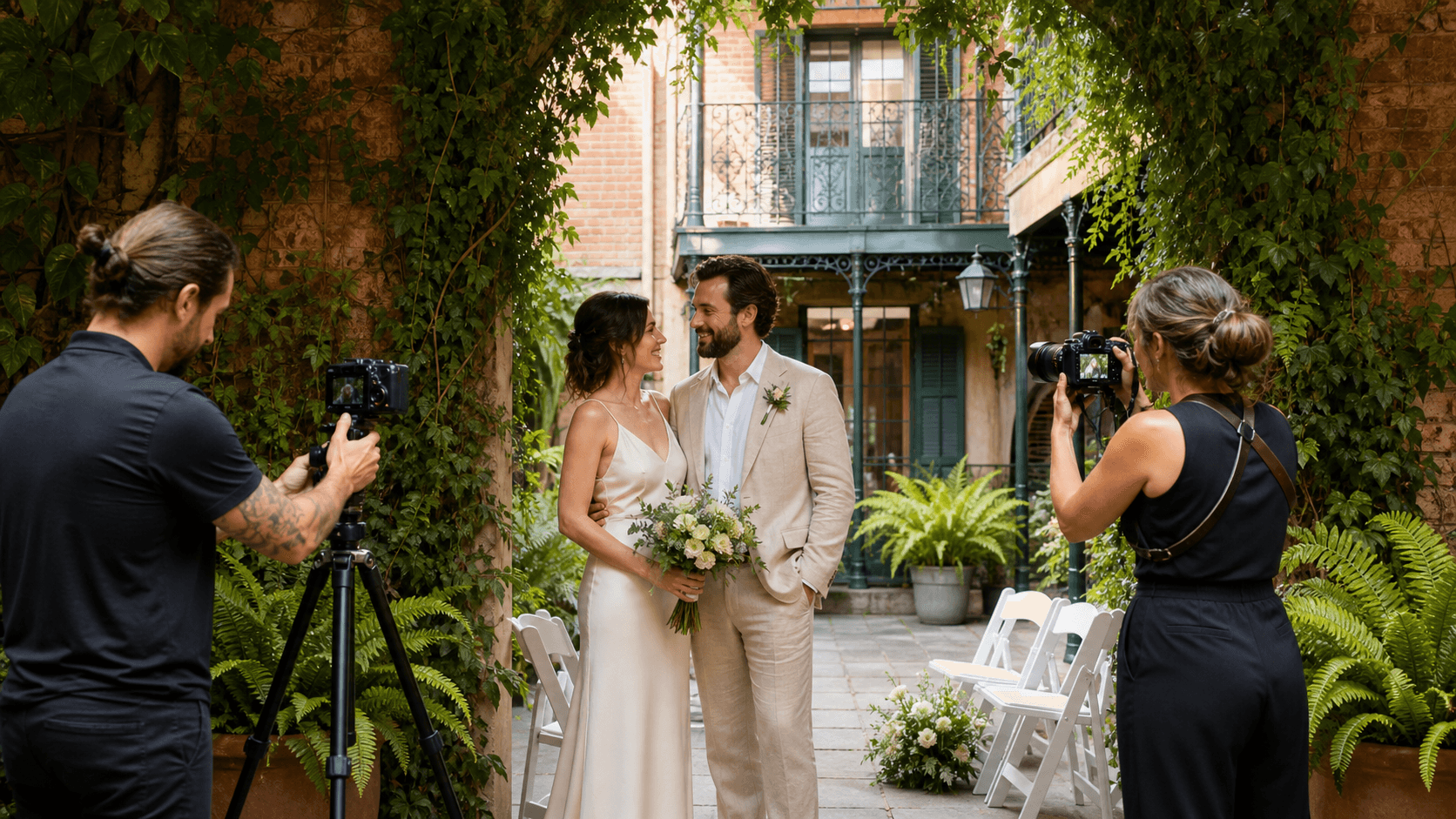
- French Quarter Courtyard + Dinner
A French Quarter courtyard ceremony at 6 p.m., followed by group photos and about an hour of dinner coverage with toasts. This window tells the story from "we arrive" to "settled into dinner," which feels complete without late‑night party coverage.
- Park Elopement with a Handful of Guests
A private elopement in Audubon Park or City Park with a few close people. Coverage focuses on the ceremony, portraits under the oak trees or along the lagoon, and maybe a quick champagne pop.
Instead of a giant shot list, think in emotional beats. Ask each other, "When do we most want to remember how this felt?" Many couples pick things like the walk into the ceremony, the hug right after the kiss, the first clink of glasses, or stepping into a favorite bar after portraits.
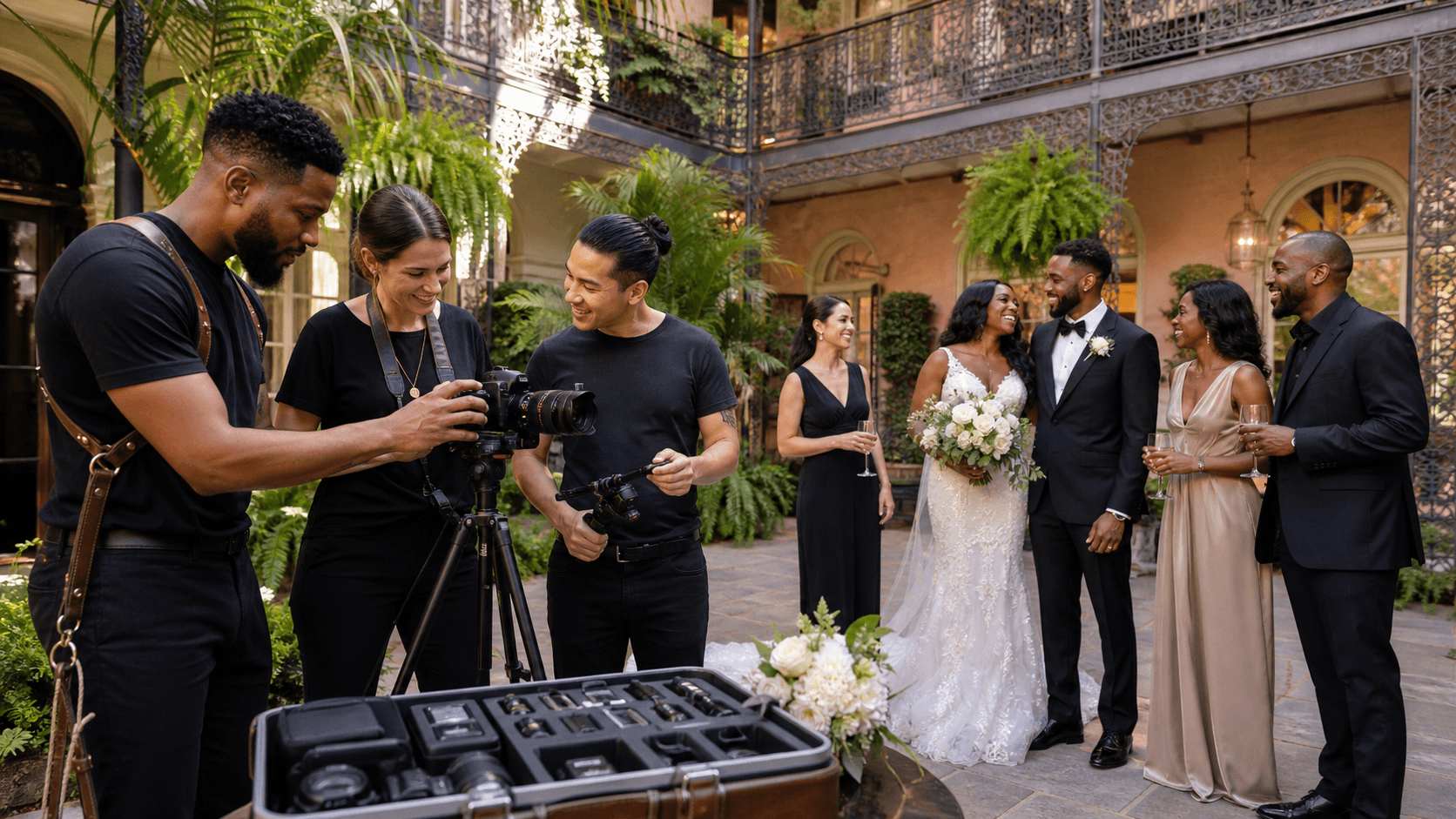
A small, experienced crew knows how to quietly guide you into good light, help move things along, and still keep it chill so the day does not feel like a long photoshoot.
Pro Tips: Navigating New Orleans Logistics
Local context can easily change how much coverage you need. An hour disappears fast in the French Quarter if you're not ready for it.
Weather, Heat, and Light
August in New Orleans is hot, sticky, and full of quick passing showers. For outdoor ceremonies and portraits, it helps to have:
- A Rain Plan like a covered balcony, a courtyard gallery, or a shaded spot in City Park or Audubon Park.
- Ceremony times that Avoid Harsh Midday Sun, since strong overhead light can be tough on photos and guests.
- A sense of when Golden Hour will be, especially if you want portraits with a softer glow along the riverfront or in the Quarter.
Travel, Parking, and Second Lines
Between one‑way streets, paid lots, and events in the Quarter, you want to:
- Build in Small Buffers when moving between locations (at least 10 to 15 minutes each move).
- Keep events on the Same Side of the City if possible (for example, staying Uptown vs. bouncing between Uptown and the Bywater).
- Share Rideshare and Parking Info with guests in advance, especially if you're using popular spots like Jackson Square or Frenchmen Street for photos.
Professional crews usually arrive early to scout parking and to have Backup Portrait Spots in mind in case your first choice is crowded or soaked.
If you're planning a second line, remember:
- Streets can get loud and packed quickly.
- It may be better to schedule vows and speeches Before or After the second line so audio is clean.
Audio and Lighting for Video
For video, audio is a big deal. New Orleans can be loud, with street musicians, traffic, and surprise second lines. Clear vows and toasts often depend on:
- Small, discreet microphones on the couple and/or officiant.
- Choosing Quieter Corners for speeches (inside the restaurant rather than on a busy balcony over Bourbon Street).
Lighting is another factor. Many courtyards, cozy restaurants, and historic homes are beautiful but dim. Pros plan for that with the right lenses, small video lights, and a bit of direction like, "stand here for cake cutting so we can actually see your faces."
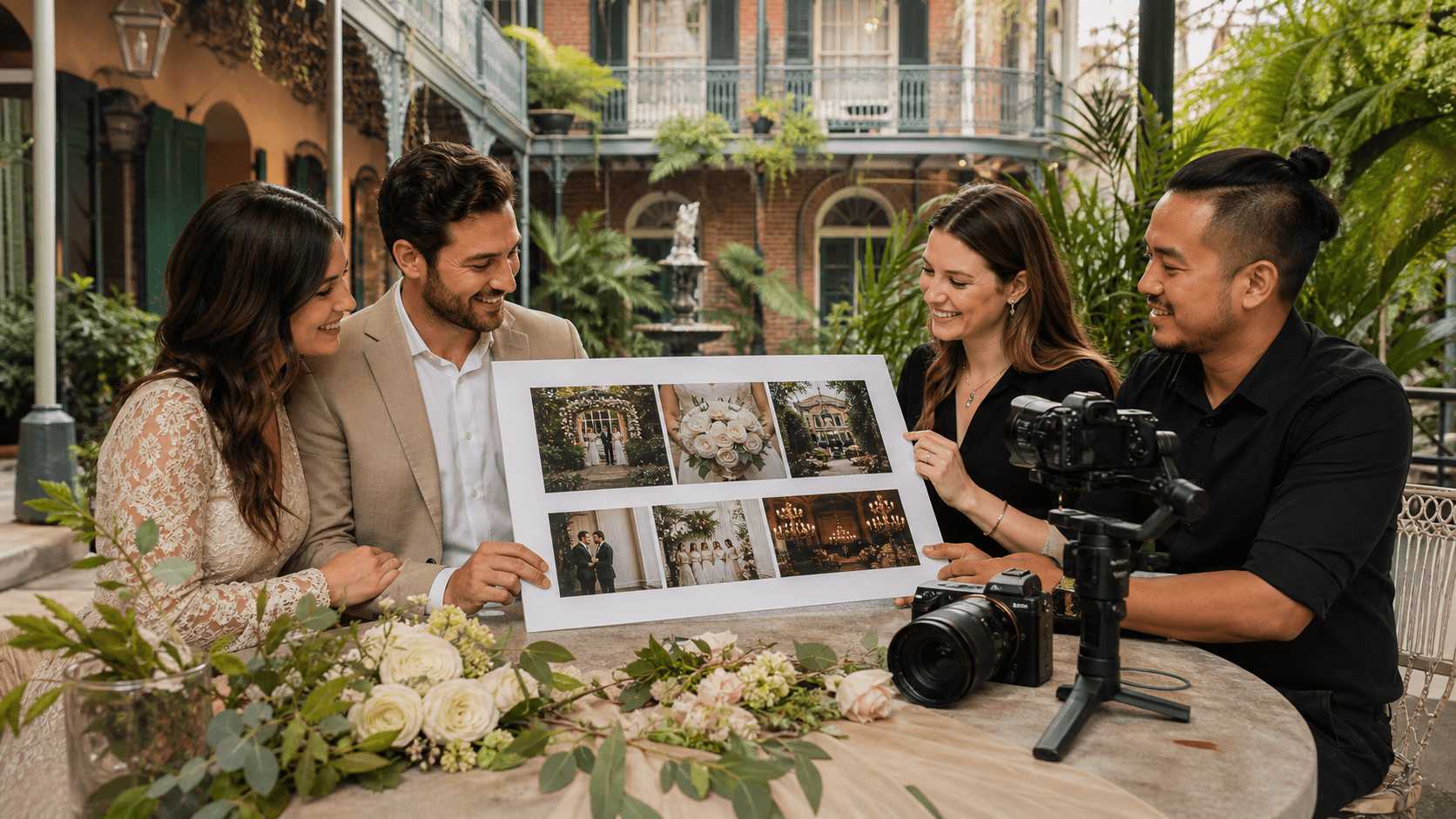
If you want to see how different amounts of coverage look in real New Orleans spaces, it can help to review Full Galleries or Sample Films from a few different timelines.
Choosing Deliverables That Still Feel Complete
Hours of coverage are not the same as what you actually get afterward. For intimate weddings, thoughtful deliverables can make a short day feel full.
For Photos
Most couples want:
- A Full Digital Gallery with Print Rights.
- A realistic range of edited images, often A Few Hundred Photos Across 3 to 6 Hours.
- A mix of Candids and a Small Set of Well‑planned Posed Shots.
Albums are lovely, but they do not have to happen right away. Many couples wait until after the wedding to decide on prints or albums, once they see what they love most.
For Video
Popular options for micro‑weddings and elopements include:
- A 3- to 5-Minute Highlight Film that walks through the emotional arc of the day.
- A separate Ceremony Edit with the full vows and audio.
- A short Edit of Toasts if you're planning speeches at dinner.
Clear audio of vows and speeches usually matters more than extra angles or very long films. You'll likely rewatch a shorter, well‑edited film more often than a long, raw recording.
Delivery Timeline and Process
For low‑key weddings, many couples want to relive the day while it's still fresh, so it helps to ask about:
- How soon you might see Sneak Peeks (for us, usually within the first week).
- A realistic ETA for Full Galleries and Edited Films (for example, 4 to 8 weeks for photos; 6 to 10 weeks for video, depending on season).
- How the team Shares Updates During Editing so you're not wondering what's happening.
When you're deciding what to book, it can help to ask yourself:
- If we care most about the Feelings and Sounds, should we put more weight on a highlight film plus full ceremony audio?
- If we care most about Sharing with People Who Couldn't Come, do we want a bigger photo gallery and a shareable highlight video?
Build Your Own Relaxed New Orleans Coverage Plan
A meaningful New Orleans wedding does not have to be a huge production. With a little planning, you can pick a package that feels complete without overbooking your day and still stay within a realistic $20K, $30K wedding budget.
Focus on a few simple steps:
- Choose an hourly range that fits your plan, usually 3 to 6 hours for micro‑weddings and elopements.
- Pick 3 to 5 must‑have moments and build your timeline around those.
- Factor in Heat, Rain Chances, Travel Time, and Lighting when you set ceremony and portrait times.
- Select Photo and Video Deliverables that match how you actually want to remember and share the day.
WeddingLens is a small New Orleans‑based photo and video team that focuses on Low‑key Weddings, Clear Timelines, and Fast, Professional Delivery. We keep our packages Affordable but Professional, and because we're a tight‑knit team, we have Reliable Backup Shooters available if something unexpected comes up.
Our process is simple: we learn your plan, suggest a realistic coverage window, help you build a clean, easy‑to‑follow timeline, and then deliver your photos and films on the schedule we've promised.
If you're ready to see how this could look for your day, you can Check Our Availability, View Package Options, and browse full New Orleans galleries and films. We'd love to hear what you're planning and help you put together relaxed coverage that fits you.
Preserve Your New Orleans Wedding Story With Seamless Photo And Video Coverage
Your wedding day deserves to be remembered with authentic, cinematic storytelling from every angle. At WeddingLens, we thoughtfully document each moment so you can relive the emotions for years to come. Explore our curated New Orleans wedding photo and video packages to find the coverage that fits your celebration. Reach out today so we can learn about your plans and create a custom plan for your day.