Plan a Timeline That Puts Sound and Light First
Clean audio and flattering light do not just happen on a New Orleans wedding day. The city has big energy, loud streets, dramatic churches, and courtyards that can be very dark once the sun drops. If your timeline only thinks about photos, video can end up with muffled vows, harsh colors, and grainy footage. When you plan with video in mind, your moments can look beautiful and also sound clear and warm.
In this guide, we are talking about real Big Easy wedding videography challenges. We will walk through when to plan vows and letter reads so your words are clean, how to handle mic placement around brass bands and second lines, and how to time key moments in low-light venues. We will also touch on late spring days, like late May, when you get long daylight hours, strong sun, and busy streets that all affect your wedding film.
New Orleans weddings are full of life. With a video-aware plan, you can keep that energy and still protect the sound and light that make your film feel cinematic instead of chaotic.
New Orleans Sound Reality and Your Ceremony Timing
New Orleans has its own soundtrack, and it does not always care about your vows. Streetcars, riverboats, hotel HVAC units, and nearby live music can all sneak into your audio if you do not think ahead. A quiet church can suddenly fill with yard work noise from next door or a crowd in the alley.
Here are common noise sources by time of day in popular areas:
- Late morning: streetcar clangs, delivery trucks, leaf blowers, hotel laundry and HVAC
- Mid-day: Quarter crowds, tour groups, louder AC cycles, restaurant vents
- Late afternoon: harbor horns, happy hour patios, street performers getting started
- Evening: live bands, DJs, second lines, rowdier street traffic and honking
To help your vows sound clean, we often suggest:
- Ceremonies near the French Quarter: aim for later afternoon instead of mid-day, when tour noise can be highest
- Outdoor courtyards: avoid peak lunch hours and loud street corners if you can
- Riverfront or rooftop spots: check when harbor horns or regular signals are likely to sound
Wherever you say your vows, build a "quiet buffer" into your timeline. Plan a short window when nothing else big is happening. No server clearing dishes, no pre-ceremony band set, no sound checks.
Ask your venue and planner questions like:
- Are there any regular events or live music nearby at that time?
- Is there ongoing construction on the block or inside the building?
- Can AC or loud ceiling fans be turned off just for the vow portion?
- Are there doors we can close during readings to reduce street noise?
Small changes like these give your videographer cleaner audio to work with, so your words feel close and intimate instead of lost in the city buzz.
Perfecting Vow and Letter Reads for Clean Audio
For Big Easy wedding videography, we like to capture vows twice, in a way: the live ceremony for real-time emotion, and a private letter or vow read for clean, movie-style sound. The live audio will have crowd reactions, organ music, maybe a streetcar dinging, and that is part of the story. The private read gives us your words with no distractions.
Good timeline slots for private vows or letters include:
- While getting ready, before hair and makeup is fully wrapped up
- Right after a first look, before guests arrive and noise builds
- A quiet rooftop, balcony, or tucked-away room between ceremony and reception
For these moments, a few simple tweaks help a lot:
- Ask friends and family in the room to pause chatter for five minutes
- Turn off TVs, music speakers, and loud phone alerts
- Step away from elevators, ice machines, or busy hallways
- Have tissues, but avoid loud crinkly wrappers or plastic
- Sit or stand where AC vents are not blowing straight into a mic
This planning is what lifts a pretty highlight film into something that feels like a real movie. You still get the roar of the crowd and the second line, but you also get clear, crisp vows that we can weave through your whole film.
Smart Mic Placement for Second Lines and Live Bands
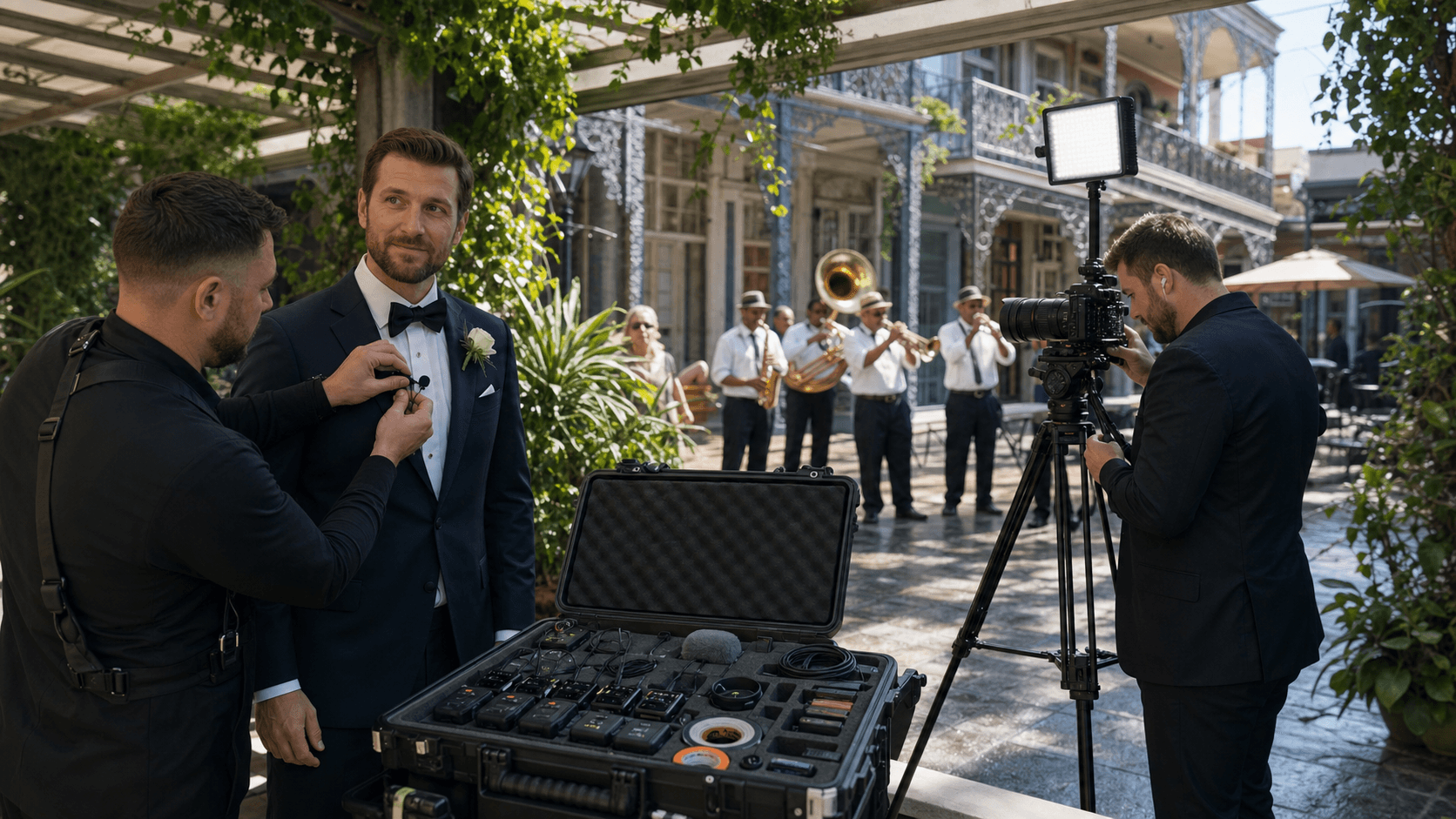
Second lines and brass bands are some of the best parts of New Orleans weddings, and also some of the hardest parts for audio. The volume jumps fast, people are shouting and singing, and everyone is moving through city streets that are already loud. Without a plan, the sound can turn into one big blur.
Most wedding video teams will mix different mic setups, for example:
- Lav mics hidden on the officiant and the groom or partner for ceremony vows
- Handheld mics or a house mic for readers and toasts
- Small recorders on or near musicians, like on a saxophone or drum, when allowed
- Backup recorders plugged into the band or DJ soundboard
If you care about sound from the second line and band, ask your videographer:
- Will you place any recorders near the band or on their instruments?
- How many layers of backup audio do you use in loud spaces?
- Can you record both crowd noise and music without it distorting?
Timing also matters. Try to:
- Build 5 to 10 minutes before the second line for mic checks and quick instructions
- Ask your band or DJ not to start cold, but to give a short cue so cameras and recorders are ready
- Coordinate with your planner so the video team can move ahead of the crowd and not be trapped in the middle
With smart placement and enough time to prepare, we can keep the wild energy of a brass band while your laughter and short comments to each other still come through.
Timing Key Moments Around Low Light and Heat
New Orleans is full of candlelit churches, brick courtyards, and hotel ballrooms with colored uplighting. All of that looks amazing in person, but cameras need a certain amount and type of light to keep footage clean and flattering. In late May, you also have long, bright afternoons and warm evenings, so heat and sweat are part of the picture too.
For first looks and portraits, late spring couples often get the best video in three windows:
- Golden hour, the hour before sunset, with soft, warm light that flatters skin
- Blue hour, just after sunset, when city lights start to glow and the sky is deep blue
- A short night session, using city streets, neon signs, or balcony views for a cinematic feel
Inside darker venues, talk with your planner and DJ about timing:
- Try to schedule your first dance and toasts when there is at least some ambient light left, especially if there are big windows
- If your room will be very dark, ask if lights can be gently raised just for toasts and key dances
- For sparkler exits or balcony shots, aim for a moment when the street noise is a bit lighter, so your cheers and music do not get buried
Heat matters too. If you plan a long outdoor ceremony or courtyard cocktail time, build in shade where possible and give your video team time to reset gear before moving inside. This keeps cameras from fogging when going from hot, humid air into cold AC, which can delay important shots.
Turn Your NOLA Timeline Into Cinematic Reality
The biggest gift you can give your wedding film is time and communication. Share a draft of your timeline with your videographer early, even if it is still a rough sketch. With a little back and forth, you can move vows away from peak noise, line up portraits with the best light, and give second lines the space they need for strong sound and smooth movement.
It also helps to pick the three moments that matter most to you on video. Maybe it is private vow audio, your cathedral entrance, and your second line. Once you know those, you can build the rest of your day to protect sound and light around them. That way, your New Orleans wedding is not just fun in the moment, it is also a story that feels clear, warm, and cinematic every time you watch it.
Get Started With Your Project Today
If you are ready to capture your New Orleans celebration with authentic, cinematic storytelling, we are here to help you plan every detail. Explore how our Big Easy wedding videography services can be tailored to your venue, timeline, and style. At WeddingLens, we collaborate closely with you so your film reflects your personality and the moments that matter most. Reach out today so we can reserve your date and start shaping the story of your wedding day.